Apr . 03, 2024 11:39 Back to list
Stainless Steel vs. Nonstick Cookware: Which Should You Cook With? universal steamer
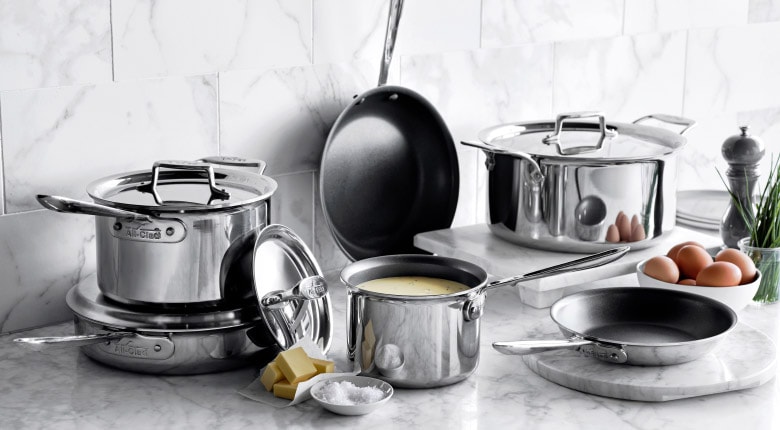
If you’re weighing the pros and cons of stainless steel vs. nonstick pots and pans, there may be more to picking the right cookware set than you think. Each option can have its place in your kitchen, and you may find that it’s not an “either-or” situation.
So—to stick, or not to stick? Here’s what each brings to the table.
Nonstick Cookware
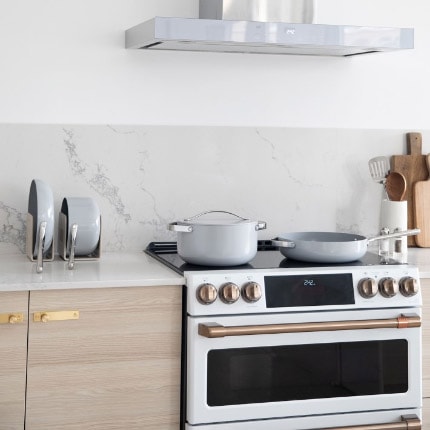
Nonstick pots and pans are typically aluminum and/or stainless steel pieces covered in a finish that keeps food from sticking to the cooking surface when heated up. For most modern pans and skillets, that finish is a PFOA-free ceramic or traditional nonstick coating.
Vintage Range Non-stick Forged Aluminum Cookware Set

If you’ve ever cooked eggs without enough oil, you know why nonstick-ability is important. Whether you’re considering traditional or ceramic nonstick cookware, you can expect a few distinct strengths, limitations and characteristics.
Nonstick Cookware Benefits
This type of cookware has remained a popular fixture in home kitchens for decades—here are just a few reasons why.
- You can achieve a scrape-the-bottom-of-the-pan-free cooking experience with little or even no added fat
- Nonstick pans need less fat to achieve that elusive perfect browning that takes proteins up to another level
- Most modern nonstick cookware is now PFOA-free
- When constructed with a thick base of aluminum or alternating layers of stainless steel and aluminum, nonstick pans offer the same heat diffusing ability of similarly constructed traditional cookware
- These pans are always ready to use without having to season them
Nonstick Cookware Limitations
Think you’re ready to go all-in on nonstick? Consider these potential limitations before making your choice.
- Depending on the construction, many nonstick pans may not be able to handle high heat
- Cleaning nonstick pans requires a gentler touch than other types of pans
- Since nonstick pans are more prone to wear, they may need to be replaced more often than other types of cookware
- Metal utensils can damage the surface of nonstick cookware
Cooking With Nonstick Pots and Pans
As the name suggests, nonstick pans are perfect for dishes that traditionally have a hard time letting go of their cooking surface. They tend to work best for dishes involving veggies and quicker-cooking proteins like chicken, eggs, fish or tofu.
Since nonstick cookware isn’t optimal for high-heat cooking, hotter cooking methods like broiling and searing are often better left to other types of pans. However, there’s still plenty you can do with these versatile pieces. From frittatas and scrambles to fresh fish and brussels sprouts, here are some of our favorite things to cook in a nonstick pan.
Best Utensils for Nonstick Cookware
Since nonstick cookware is finished with a top coating, it’s best to avoid sharp, abrasive utensils. Look to soft-edged silicone, rubber or your favorite standby wooden spatula when cooking dishes like these healthy recipes on nonstick pans.
Stainless Steel Cookware
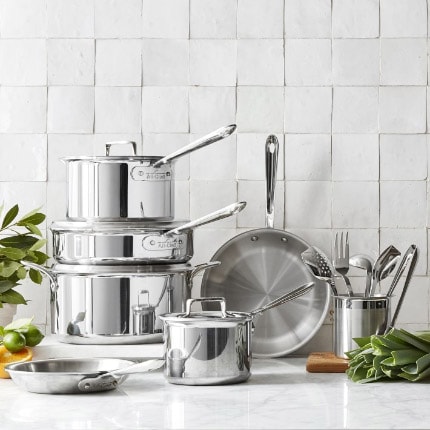
Noted for its heavy-duty construction, stainless steel cookware blends functionality, longevity and clean design. Like nonstick cookware, however, it has its own set of limitations to balance those strengths.
Stainless Steel Cookware Benefits
Here’s why a set of stainless steel pots and sauté pans is essential for any discerning home cook’s kitchen.
- With multiple bonded layers of alternating steel and aluminum, quality stainless steel cookware is exceptionally conductive and distributes heat evenly
- Stainless steel pots and pans are incredibly durable and can be used heavily for years to come
- Highly polished stainless steel surfaces can be naturally stick-resistant
- With no synthetic finish, top-shelf options are safe for baking and broiling up to 600°F (this can vary based on manufacturer recommendations)
- There’s virtually no metallic taste transfer with stainless steel
Stainless Steel Cookware Limitations
While stainless steel may offer a bevy of notable benefits, there are still several care and use limitations to think about.
- Without a nonstick coating, these can require more fat to achieve browning.
- You may need to use more fat or season these pans occasionally to reduce sticking.
- When food does stick, cleanup can take a little elbow grease.
- Heavy-duty construction also means these pots and pans may be somewhat heavier than aluminum nonstick pans.
- While stainless steel pans are dishwasher safe, it’s recommended to hand-wash stainless steel cookware and avoid using high heat, overly abrasive chemicals and steel wool.
Is Stainless Steel Nonstick?
Though “nonstick” may not be in the name, high-quality stainless steel cookware like All-Clad’s and Cuisinart’s are naturally stick-resistant. Seasoning your pans and skillets can help improve their performance, and limiting stovetop cooking temperatures can also help keep stubborn foods from sticking.
If you need a little extra help keeping food from sticking, here’s how to season a stainless steel pan:
- Step 1. Start by coating the pan in oil.
- Step 2. Heat the oil until it starts to smoke.
- Step 3. Let the oil cool.
- Step 4. Wipe the oil out with a rag or paper towel.
- Step 5. Repeat as needed.
Cooking With Stainless Steel Pots and Pans
Knowing how to cook with stainless steel can both improve your cooking and help increase the lifespan of your favorite cookware.
We recommend cooking with butter or your preferred oil. This will help reduce sticking and give your proteins and veggies that restaurant-quality browning. Keep in mind that you will need a more generous amount of your chosen fat when cooking in stainless steel than you would with a nonstick pan.
To keep your stainless steel pans from warping, always add high-quality fat to the pan before exposing it to heat. If you’re using oil, it should take on a light, shimmering quality before it starts to smoke, which is when you know your pan is ready for action.
Best Utensils for Stainless Steel Cookware
Since they lack the coating of a nonstick pan, stainless steel pans are a little more forgiving about the types of kitchen utensils you can use on them. However, you should still try to avoid using overly sharp or abrasive items, which could scratch the finish.
Nonstick vs. Stainless Steel Cookware Safety
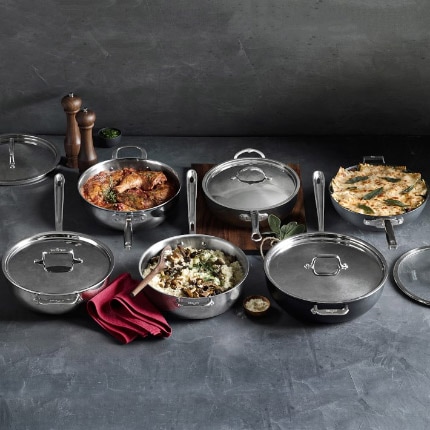
If you want to continue making healthy food for the long haul, caring for your cookware is always important, no matter which type you’re using. That’s why we’ve put together these safety and care considerations for both nonstick and stainless steel pots and pans.
Is Nonstick Cookware Safe?
Did reports from years ago about the safety of nonstick cookware leave a bad taste in your mouth? You can gain some assurance by taking good care of your modern PFOA-free cookware.
First, remember to always follow manufacturer recommendations to maintain nonstick safety. Second, remember to follow nonstick cleaning and cooking best practices like avoiding harsh cleansers, dishwashers and abrasive cleaning materials. This will help maintain the quality of your pots and pans and preserve their finish.
Are Nonstick Pans Oven Safe?
Most modern nonstick pans are oven safe up to 450-500ºF. The best way to know for sure if your particular model is oven safe is to check the manufacturer’s recommendations included in your cookware’s packaging.
Is Stainless Steel Cookware Safe?
If you have allergies to specific metals, you may want to check the composition of your stainless steel pans, which can vary from brand to brand and model to model. As with nonstick pans, proper stainless steel cookware care will help ensure your favorite pots and pans hold up properly over time and continue cooking effectively.
Are Stainless Steel Pans Oven Safe?
Stainless steel pans and pots are extremely durable and are commonly oven safe up to 600°F. In short, for just about anything you’re cooking at home, they can handle the heat.
Stainless Steel or Nonstick: Which Is Right for You?
Looking for unparalleled convenience and lower-fat cooking? Nonstick may be for you. Want exceptional durability and unmatched versatility? Stainless steel could be your best bet. Want both? If you want to cook like a pro in your own home, it’s never a bad idea to have multiple types of cookware on hand so you’re ready to handle any recipe that comes your way!
 English
  Arabic
  French
  German
  Italian
  Japanese
  Korean
  Portuguese
  Russian
  Spanish