Apr . 03, 2024 14:36 Back to list
12 Truly Non-Toxic Cookware Brands for a Healthy Kitchen (2024) universal steamer
Remember those ads about how convenient is non-stick cookware? Finally, no eggs stuck onto your frying pan, and no more scratching them out while cleaning your stainless steel pan? Cooking made easy, right?
The “non-stick magic” was repeatedly announced for many cooking appliances including frying pans, woks, pots, casseroles etc. you name it.
Flame Range Non-stick Forged Aluminum Cookware Set

We were all told that as long as you’re using a wooden spoon or spatula and you’re not scratching the surface coating of this cookware, you’d be fine. Well, that’s easier said than done. Haven’t you noticed how your nonstick cookware wears thin over time?
Is Non-stick Cookware Dangerous for Your Health?
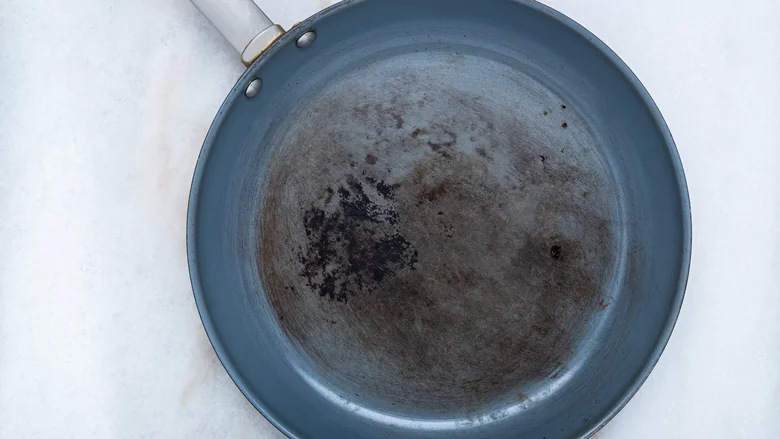
Over time that surface is not as thick, shiny, and non-stick any longer, and sooner or later, you end up using your stainless steel fork, knife, spoon or any other metal tool and the results are scratches on the surface.
A late 2022 study titled “Raman imaging for the identification of Teflon microplastics and nanoplastics released from non-stick cookware” by the Australian Newcastle and Flinders University and published in the Science of The Total Environment Journal found that even one surface crack on a Teflon-coated pan could release approximately 9,100 microplastic particles. Furthermore, through their Raman imaging and algorithm models, they found that broken coating on your non stick cookware may lead to the release of 2,3 million microplastics and nanoplastics, that leach into your food and contaminate it in the form of PTFE (Polytetrafluoroethylene) / PFOA (Perfluorooctanoic acid) “forever chemicals”. These groups of chemicals also called PFCs (Perfluorochemicals) and are used to make fluoropolymer coatings and products that resist heat, oil, stains, grease, and water.
Teflon is the brand name behind the most famous PTFE non-stick coating and the petrochemical giant DuPont is the inventor of this synthetic chemical. However, over the years other chemical manufacturers have made similar coatings without using that branded product. Also, because PFOA and PFTE have received such a bad reputation, companies have started replacing those chemicals with other for ever chemicals of the same family like Gen X. Overall, there are thousands and thousands of for ever chemicals. Don’t be fooled by PFOA – PFTE free claims – the safest non stick pan doesn’t exist!
Cooking is an essential part of our daily lives, but the type of cookware we use can significantly impact our health. We just discovered that many traditional pieces of cookware release harmful chemicals and even release toxic fumes when exposed to high temperatures. To make informed choices for your kitchen, you need to know which cookware isn’t toxic and is safe, as this is the best for your health and for the environment. Opt for coating-free, and therefore plastic-free cookware.
Cheap Non-stick Cookware is Piling Up in Landfills by the Millions Every Year in Every Country
Cheap syntethic-coated non-stick cookware brands offer the best budget option but that’s only a short-term view as they want you to buy a new pan every couple of years, right? Once scratched you have a toxic cocktail of chemicals leaching into your food and one of the safest things to do is to dispose of these.
However, one of the many problems with these non-stick pans is that they are extremely difficult to recycle as they are often made of multiple materials (steel, Teflon coating, plastic handles etc.) These products aren’t designed for disassembly and repair, but just for landfill according to the principles of a linear economy (take – make – waste). Most recycling companies won’t accept them, so they simply get thrown out with the household waste destined for landfills by the millions every year. That is an environmental disaster as the PFAS coating remains in the soil for centuries.
For example, according to Kitchen Warehouse a staggering 72% of Australians toss their old cookware in general waste bins, which equates to a massive 2.7 million pieces of cookware ending up in landfill each year. That’s 7,000 pieces per day. To counteract this Kitchen Warehouse has launched The Great Exchange Pan a cookware recycling initiative.
This article will help you find the best eco-friendly cookware picks, as most of them can be recycled at the end of their life.
Which are the Safest, Non-Toxic Cookware Materials?
To identify non-toxic cookware, we’d like to point out the safest cookware materials on the market, the ones that have existed for centuries and despite not being the most convenient or budget, they are some of the safest and healthiest avalable on the market:
- Cast iron. A material that has been used since ancient times and withstands the test of time. It heats very well and evenly throughout the product It offers a natural way to increase your body iron levels. One of the cons is that it is a material that is a bit heavy to handle.
- Enameled cast iron. A cast iron that has a vitreous enamel glaze (non-porous like glass) applied and fused to the surface to prevent rusting, eliminate the need to season the metal, and allow more thorough cleaning. Enameled cast iron is excellent for slow cooking and drawing flavor from foods.
- Wrought iron. Wrought Iron is iron that has been heated and then worked to the preferred shape with tools. The main difference to cast iron is that cast iron is melted, poured into a mold, and then allowed to solidify.
- Stainless steel. If you’re allergic to nickel, buy food-grade nickel-free stainless steel, usually stainless steel (21/0), which means 21% added chromium and no nickel. Stainless steel is not the best at conducting heat, which is extremely important when cooking. Therefore, full-clad cookware is to be preferred because it is more heat-responsive. Full-clad means that the entire body of the pan, and not just its cooking surface, is made of bonded layers of stainless steel with a core made of aluminum or copper, like a sandwich where the stainless steel is always on the outside.
- Carbon steel. It is lighter than cast iron and more heat conductive and stick-resistant than stainless steel. The smooth cooking surface is great for cooking eggs, like a non-stick pan, but the seasoned vegetable oil coating tolerates far higher heat, and gets better with use and care.
- Glass. As a non-porous material, it doesn’t hold to any flavor or odor, it is durable. It’s not non-stick though and it requires some form of fat or grease when used at high temperatures. Make sure it is lead and cadmium-free.
- Pure ceramic. Pure ceramic cookware doesn’t have to be confused with ceramic-coating. The first one is made of 100% ceramic, or better clay and has absolutely no metal content. It has a silica-based glaze that gives it a shiny, smooth surface after baking in a kiln. The latter is only a synthetic coating, please see our note below.
These materials are not advertised as non-stick and with reason! They require a bit more care in handling and use but at least they have no synthetic coating. Avoid also copper or aluminum cookware as these materials migrate into food, particularly acidic one.
Is Ceramic Coated Cookware Safe?
We haven’t included ceramic-coated cookware like Caraway cookware, Bialetti, GreenLife, GreenPan etc. in our list because, in our opinion, every coating triggers some health concerns. Ceramic coating, like Teflon cookware coating, wears out over a short time (usually one year) and it can be damaged easily. This can expose heavy metals like lead, cadmium, neurotoxic aluminum (which is often used as a base) in direct contact with food and be potentially harmful. Have you asked yourself why?
Ceramic non-stick cookware is not made of ceramic! The apparently non-toxic ceramic coating is made from silicone dioxide which is a byproduct of sand. During manufacturing a process called sol-gel transforms the material into a gel that gives its non-stick properties. Because of its smooth and glossy “look and feel” it’s labeled as ceramic as this word gives people a perception of an “artisanal product”, but in reality, it’s another synthetic-based polymer coating that is softer than metal, so the surface degrades with normal use. The coating releases some silicone oil that once heated prevents the food from sticking onto the pan, but once that’s finished your food will start sticking. This usually happens after only one year … and yet… another frying pan going to landfill adding to the millions already there, right? Not, that’s not what we mean with zero waste cooking.
Plus, scientists have reported on the possible release of titanium dioxide nanoparticles from non-stick coatings into food. If the manufacturers are not transparent about the coating material they use, what else are they also not transparent about?
This video is a great explainer about the difference between ceramic cookware and ceramic coated cookware.
 German
  English
  Arabic
  French
  Italian
  Japanese
  Korean
  Portuguese
  Russian
  Spanish